Showing posts with label Writing. Show all posts

4/5/11

REVIEW OF "THE FIRST LINE"

I’ve read past issues of The First Line, and with all honesty, their spring journal couldn’t’ve been timelier, both economically and personally. Editor David LaBounty explains that their current first line Sam was a loyal employee was his wife’s creation “… sprung from one of her free-writing exercises” where “she was influenced by our current economic conditions.”

Tom Green’s “Cog” centers around the Transglobal Endeavors Collection Agency where Sam “could slip into a kind of auto pilot and coast through the day” making phone calls, most of which people would not answer. Sam surmises that “… if the only way you could reach a person was by phone, you were unimportant,” and rightfully so, because if you did answer a phone call from Transglobal, if you did answer a phone call from Sam, who often referred to himself as a “lowly cog” in the greater scheme of things, then YOU DID BECOME IMPORTANT. Why the contradiction? Because the “lowly cogs” were part of the housing foreclosure process.

In Izzy David’s “The Kiss” Sam, or should I say Samantha Wayne, a minimum wage worker concerned about her ability to pay for college, sarcastically contemplates “selling her body or something.” Samantha cleans her boss’s son’s vomit off the miniature golf green’s cheap ornamental pergola, talks sharply to the boss’s wife and friend, and walks away from a situation, a kiss initiated by her, that if she had thought it through could’ve scored her some real money in a court of law; instead, she quits her job.

But my personal favorite “Windows and Gateways” by Barbara L.W. Meyers reflects unemotional responses, computer-like conditions, and an inevitable separation of employment. In “Windows …” twenty-three year old Samantha D. Thompson promotes to Senior SENO for Tetrix, Inc. for her “uncanny, unnerving, almost eerie ability to anticipate mental connections and trends.” In other words, she’s an expert at helping clients discover what they’re searching for. And why wouldn’t she? SENO is an acronym for “Search Engine & Network Optimization.” Here’s one of my favorite sentences: “And Sam was the colander through which that data was sifted.”

There are five more stories, each cleverly done, and at $4.00 per printed issue, I’d recommend this under-priced journal to anyone interested in breaking into print. Their next submission deadline is May 1st and the first line is: “We need to talk.” With therapist, doctor, and lawyer appointments, along with sound advice from friends, I just might be able to break into the next issue of The First Line myself. Check it out here.

3/12/11

R.I.P. "Cocoon Man"

I’m starting to wonder whether my minimalist approach to flash-fiction is a contributing factor to all those rejection letters. Or am I “not getting it?” Or do I need one of those MFA’s (aka My Friends’ Association)? Or am I just plain too stubborn? Here’s the latest:

JR,

We love you. We really do. Thanks for sending “Cocoon Man” for the FF500 contest. Unfortunately, we are going to pass. Yes, we suck, we know. We are happy to say that your piece made the top 10, and it was a difficult top 10 to choose from.

Now go get this piece published. Like right now.

Best and always,

Mel Bosworth & Tina Prouhet
Editors of Flash Fire 500


Everybody “seems” to love “Cocoon Man” but nobody wants to publish it. Maybe it’s time to lay it to rest. If the Journal of MicroLiterature rejects it, then I'm going to request DNR status.

2/21/11

A Compendium of Voices: DVQ, Issue 8, Vol.3


--------------------
Disclaimer: Although my story “FindYourMate.com” appeared in a previous issue of Diverse Voices Quarterly, I do believe my views here are impartial. You are more than welcome to leave a comment at the end of this review.
--------------------

Diverse Voices Quarterly, Issue 8, begins with Antonia Crane’s “Pleasures,” a first person narrative about dying and tempting fate. The narrator avoids the inevitable: a road trip home to see her terminally ill mother, opting instead to perform on a “rusty metal pole” inside a strip club. She knows she can’t compete with the younger dancers who have “legs like blades of Texas Blue Grass and slim pointy ankles,” but doesn’t seem to mind attracting an odd assortment of older gentlemen for their money.

In Gene McCormick’s “Horace Reads the Wall Street Journal,” Horace isn’t reading the newspaper at all because Emma—presumably his wife?—unintentionally elevates household chores to an enticing, yet subtle, strip-tease: Bending over, pushing, pulling, reaching.

It isn’t until A. Frank Bower’s wedding anniversary story “White Lies,” where two married couples argue inside a family restaurant, that we suffer our first repulsive gut shot of tasteless porn-dialogue. Perhaps in choosing this story, the editor of DVQ wants to showcase a wide-range of sexual tension between an array of fictional characters. If so, I’m not sure this piece fits.

Thankfully, the next two poems serve as romantic-interludes, alleviating or toning-down this tension:

Roger Perez Jr.’s “Any Thing Left”: Tulips injected into the granite / with little soil, whisper and remind / me of our first stare, and Raina Lauren Fields “love as a flipbook”: of curiously fondled covers, of slow-turned / pages, until he & i are no longer sipping / warm wine from plastic cups.

Interestingly enough, K.W. Taylor’s flash fiction piece “Phlegmatic” resolves a boyfriend / girlfriend conflict of epic proportion but does so with civility and understanding; whereas Janet Thornburg’s “Musical Tables” (my personal favorite) demonstrates the complexities involved in a platonic relationship where the narrator’s true feelings are symbolically revealed at the closing of her 40-year class reunion.

Relationships, authentic feelings, near the end of DVQ, Issue 8, shift gears, having turned mechanical with Adam Crittenden’s two poems: “A Moment in the Life of the Tin Man’s Girlfriend” and “Zombie.” From the first poem: But you are sterile, you’ve always been, / and I am left with the mess / and an oil can. From the second: he lays down / with lazy eyes he remembers / what she had said earlier / it seems like we are going / through the motions. The emotional impact of these words, although held in check, pack more wallop in the closing pages and heighten the awareness of each piece.

Overall, the placement of each story and each poem in DVQ, Issue 8, makes for an interesting read and is one of the editor’s best efforts yet of displaying a good cross-section of diverse voices and tolerances. As for the digital layout, DVQ, is comparable to other e-journals but lacks an interactive table of contents. I found myself having to bookmark my favorites, which, if you really think about it, isn’t such a bad thing. I would highly recommend this free e-journal to anyone interested in poetry and/or fiction. Fire-up your e-readers. Here’s the link: Diverse Voices Quarterly, Issue 8

--------------------
*Note to self: With spring just around the corner, I will be posting more poetry—new & old. You've been warned.

1/20/11

CARAMEL & BUTTERSCOTCH

“You wanna get someone good …” Prisoner Bismarck half-asks, half-suggests, referring to the flash-fiction piece I just read to the entire class, “… use sugar.” This leads to a discussion about caramelizing sugar. “White sugar is for making caramel,” he says, “and brown sugar is for butterscotch.”

The flash-fiction piece that generated this discussion is called “Hot Chocolate & Microwaves.” You can read it at Staccato by clicking here .

Comments are strongly encouraged at their website.

Thank you, Matthew Boyd, Editor of Staccato.

1/10/11

THE HOLE I HAD DUG & WHAT I HAD BURIED


Cold-blooded killers make interesting narrators, especially when speaking about such mundane topics as “Hot Chocolate & Microwaves.” My flash-fiction piece of the same title has been accepted by Staccato. It’ll be my third appearance on their website. Thank you Matt!

In the meantime, if you get the chance, check out Staccato’s first story of 2011, "Surface Wounds"  by Nancy Stebbins. Also, zoom in and tell me what you think the significance is behind the glyphs. I’m still contemplating whether they will be there a week from now. I’m praying those sightings can be substantiated, that it isn’t my imagination running amuck!

1/8/11

I'M SERIOUSLY THINKING ABOUT DEACTIVATION


I have this urge to “deactivate,” but whenever I say, “this is it, today is the day,” I back peddle; I think about what Peter Schwartz, editor at Dogzplot, had said to me well over a year ago: James, I’m obsessed with what else writers do besides write and you’re living proof of my latest theory. See, you work teaching in a prison which is a real ass job, and so no surprise, your writing is very honest, intimate, powerful and…real. I want to read more of your stuff and invite you to submit to Dogzplot, so I’ll start by checking if you’re on FB.

That’s when it all started. I thought I was missing out on something. How could I ever be discovered as a writer without a facebook account? Still, I dawdled. Then my wife encouraged me to take the plunge and plunge I did—with 99 friends so far, of which most of them are from my high school years. Perhaps my timing is all off. I never sent a friend’s request to Mr. Schwartz, and even though I’ve got a few of my favorite writers and literary journals linked to my FB, I’ve been preoccupied with my 30-year high school reunion and whether it’ll even take place this summer.

So I’ve strayed.

FB was going to do for me what Blogger didn’t, or so I thought: generate an interest in my writing. Still, those rejection letters keep coming. And why shouldn’t they? That’s part of the process. And I’m fine with that.

But here’s what really chaps my ass: How FB can actually hinder your social life. For instance: about three weeks ago my wife and I stood in line at Lowes, waiting to make our purchase. Another customer was buying something directly across from us. She and I had made brief eye-contact earlier in the store and I had smiled. She, in turn, had quickly changed directions and ducked down a different aisle.

“Did you notice the lady across from us,” I asked my wife once we got into the parking lot. “She graduated from my high school.” My wife said she sensed an awkward moment at the checkout. I replied, “Yeah, I sent her a FB request and got ignored.” My wife knows that I’m fine with rejection, especially on FB because some folks reserve it for family, and hey, accepting a friend’s request from a convict-teacher could invite a bad element. I understand that. But what if I had never sent a request, would the woman I had gone to high school with such a long long time ago have spoken to me? Maybe. Maybe not.

Thus, I’m thinking of “deactivating” my FB account. I figure if I lay low for awhile, I’ll have been forgotten. Then I can “reactivate” with the intention of embracing the writing community. What do you think?

1/4/11

2010: YEAR IN REVIEW (Horn Tootin')


I may not have met my biggest goal for 2010, but I did manage a few things. Listed below are last year’s accomplishments and/or note-worthy events:

March 8, 2010: Staccato Fiction publishes “Still Life in Detroit.”

May 8, 2010: Driftwood, A Review of Michigan Writing publishes “Needing Attention.”

May 14, 2010: Six Little Things publishes “Getting Out from Under a Rock.”

(Two months later, Prisoner Timothy O’Reilly goes on trial in a rare federal death penalty case; The FBI planted a listening device in his bunkie’s radio, hoping he’d get O’Reilly to talk about his crime. Both inmates were housed at my place of employment. “Getting Out from Under a Rock” dealt with this incident prior to my knowledge of it. Weird.)

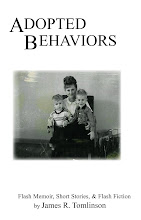
July 4, 2010: Motor City Burning Press publishes Adopted Behaviors.

July 22, 2010: Spencer Dew of decomP magazinE reviews Adopted Behaviors.

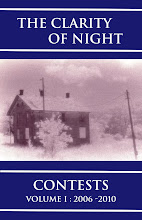
August 5, 2010: Designed first e-book, The Clarity of Night, Contests, Vol. 1: 2006 – 2010 for Jason Evans.

August 11, 2010: First attempt at writing science fiction with “Stratagems: Polonium-210.” Makes the cut at The Clarity of Night.

September 2010: Featured reader at Pointe Java’s open mic in Eastpointe, MI, thanks to Mark C Durfee.

October 1, 2010: Sleet Magazine publishes “The Trigger Man & His Accomplice.”

November 19, 2010: Joined fellow MCBP poets Mark C Durfee & Michelle Brooks for a reading at the Lawrence Street Gallery in Ferndale, MI. Received an acknowledgement in Durfee’s book The Line Between.

December 2010: Trailer Park Quarterly accepts “From the Blue Sky” for their next issue.

Hopefully I can do even better in 2011.

Speaking of accomplishments, congrats to Michelle Brooks for the latest news regarding her novella, Dead Boy, Live Girl. I can’t wait to read it!

12/31/10

OLD LONG SINCE; BO-NEN-KAI

The assignment was quite simple and even though I was greeted with “You’re the only son-of-a-bitch here” most of my convict-students went about completing the task. As I monitored my classroom I said, “It’s not going to be a polished piece. What’s important is that you get your thoughts down on paper; that you jot down a few possible New Year’s resolutions for 2011.”

“I’m locked-up in this bitch, so what’s it matter?” Prisoner Clayton said.

“Even in here,” I answered, “you’ve got to look forward to another day.”

Prisoner Clayton asked if he could sketch a celebratory scene of how he’d ring in the New Year. I figured it was better than arguing; at least he’d be doing something. What you see above is a direct result of his efforts.

Although some of the resolutions were better than others, I thought I’d share a low-functioning prisoner’s “over-simplification” of how to improve your lot in life. He starts out wanting to purchase a $300,000 home. Then he offers his unrealistic solution on how to acquire it, followed by ways of saving money. Please click on the document below and enjoy his rough draft; I’m sure you would agree, especially after reading his piece, that dreaming is easy and cheap.


Most of my convict-students have high hopes of changing their attitudes and reconnecting with family; boring stuff actually, considering their limited choices in the hoosegow. Still, it’s interesting examining resolutions made by others. I’m not sure why I thought this assignment was such a good idea; in fact, I think subconsciously I wanted to take my mind off of my own failed goals for 2010.

The Japanese have what they call “bo-nen-kai” parties, otherwise known as “forget-the-year-gatherings.” I’m struggling with the appropriateness of it, considering their cultures high suicide rate and how killing off the year with temporary amnesia solves absolutely nothing; but, I’ll have a drink or two from the comforts of my home and quietly reflect on where I’d went wrong with last year’s dreams and desires. At the stroke of midnight, when the people in Times Square drunkenly sing:

Should old acquaintance be forgot,
and never brought to mind ?
Should old acquaintance be forgot,
and old lang syne ?

I’ll turn off the television and the lights, lie down, and wake up to a new sunset.

Happy New Year everyone!

12/11/10

SUBMISHMASHIN'


I’ve been Submishmashin’ these past few months, submitting my flash fiction here and there, at PANK, Smokelong Quarterly, Bull Men’s Fiction, >kill author, Hobart and few other online literary journals. Also, since they’re the Trailer Park Quarterly and haven’t associated themselves with Submishmash I sent them two flashes as email attachments.

Thank you Julie Buffaloe-Yoder  for the heads-up regarding TPQ and for your words of encouragement. After communicating with the Trailer Park Management, they’ve accepted my flash fiction piece titled “From the Blue Sky”—a piece I had read in slightly different form at the Lawrence Street Gallery back in November.

Also, thank you Rebecca Schumejda, Trailer Park Manager, for the pre-approval; acceptance into the trailer park is truly an honor. I can’t wait to see the next issue.

11/21/10

VOLATILE CONDITIONS


I gave a reading last week and the youngster in the front row said, “You suck,” and no matter how hard I tried, the verbal jabs kept coming:

“Man, I wish I had some ear plugs.” “This blows major chunks.” “When I was at Boysville there was this woman, now she COULD write!”

I’d had enough and felt quite comfortable confronting him. “You’ve been mighty fucking rude,” I said. Then, since he stoked my interest, I asked, “What writer are you talking about?”

Of course none of this happened at the Lawrence Street Gallery performance (more on that in a later post). No, I’m referring to my “dry run,” my practice reading in front of a room full of convicts.

The youngster upfront knew the writer by last name only—“Reardon,” he said. “She wrote crime fiction.”

When I asked him, “What exactly did she do at Boysville?” he didn’t seem to know.

“But she worked there,” he stated, as if I were ready to call him a big fat liar.

“So,” I continued, “can you name some of her books?”

He couldn’t. Instead, he countered, “You don’t even know who I’m talking about.”

Unfortunately, at least for him, I did know exactly who he was referring to. When my basement flooded, her water-soaked novel, “Billy Dead,” made the trash heap. I wasn’t particularly fond of the novel, but still she’d gone the distance—more than I could say.

“She shot her father in the ass,” I told my number one heckler.

“You’re full of bullshit,” he said.

“Sorry,” I said, “but she shot her father in the ass.” I wasn’t trying to be funny; violence is not funny. I was stating a fact.

He refused to believe me. “She was a really nice lady.”

Her name’s Lisa Ann Reardon. Her criminal offense happened on 8/21/09. Her ERD (Earliest Release Date) is 8/20/13. Her maximum discharge date is 8/20/26. I wonder whether she’s still writing. Whether the Michigan Department of Corrections will allow it without demanding profits from her latest work?

As I’ve said before, “We are all capable of violence.” In this case, Reardon claims she needed to protect her nieces from a sexually abusive father; none of which has been proven. Then there’s the other side of the coin, her mental condition at the time of the shooting, her references to Godfrey, her lost cat.

Her website can be accessed here: Lisa Reardon.

As for the LSG reading, check-out Rick Moore’s review here The Writer and The White Cat. And, no I didn’t pay him or hold a gun to his head. Rick, you’re too kind.

11/17/10

THE TRIO, GEARING UP FOR FRIDAY


I’ve narrowed down my set list for Friday’s reading at the Lawrence Street Art Gallery. It hasn’t been easy. The biggest factor in my selection: What stories, flash fiction, or flash memoir best reflect who I am as a writer?

Also, keeping in mind that folks want to be entertained, what feelings will these pieces elicit? I certainly don’t want to offend the audience or send anyone into a deep state of depression (even though some of my writing is indeed offensive and/or doomy and gloomy). Also, I need to think about the order of each piece. I’ll probably end my set with something semi-humorous, perhaps “The Mathematical Genius”—short, but sweet.

I look forward to seeing everyone, and I’m glad that I get to go first, that way: I can sit back and enjoy the performances of Mark Durfee  and Michelle Brooks. For more info click on the picture or go to: POETIC TRAVELERS.

10/21/10

THE THINGS THAT MOVE US


“You don’t understand,” Prisoner Carnell says above the laughter. He’s defending his absence from class, trying to put last week’s observation cell and padded gloves behind him.

“You just want attention,” Prisoner Melton, one of my brighter students, says.

Carnell pushes his long-john sleeves all the way to his shoulders as if he’s ready to whup some ass. He’s fairly small, 140-lbs, and his forearms and biceps have a history beyond his years.

“Damnnn!” a few students say. They’re impressed with the display of old and new battle scars.

“Don’t get me wrong,” Prisoner Carnell says, “I’ve kicked plenty of ass in my day. I’ve got more pent-up rage, more anger, than anyone here could ever handle.”

“Fuck off,” Prisoner Melton says, “I ain’t a-scared of you.” He puffs out his chest, his testosterone level increases.

“You have no reason to be afraid of me.” Carnell slides his sleeves back down. “My chances of going home are better if I don’t fight.”

“Doin’ THAT,” another student indicates, “ain’t gonna help you to freedom.”

Carnell explains his actions. “Whenever someone’s wronged me, pissed me off, I cut. It’s my way of dealing with the bullshit. I’m not hurtin’ no one.”

An argument ensues between Carnell and Melton. It’s fairly obvious Melton is egging him on, trying to verbally abuse him. After a few minutes of back-and-forth insults, I intervene. “Gentlemen, I need your itineraries. Now.”

They know the drill. Both are booted from the classroom for excessive noise. Carnell demands a waiver form. “I’m not coming back,” he says. Melton shrugs his shoulders, “see you tomorrow Teach.”

***

Recommendation: John Jeffire’s “Stone + Fist, Brick + Bone.” There’s some powerful poetry in this collection. My personal favorite, which relates to the above post, is “The Composition Teacher Ponders Questions Posed by His Students at the Allen Correctional Institute.”

***

Note: Lori A. May's interview with Tonja Bagwell, curator of the Poetic Travelers series.

9/9/10

MY PROBLEM WITH THE MENTALLY ILL

When the woman who bought my chapbook pulled me aside to discuss writing and publishing, another woman threw a verbal jab my way. “Do you have a problem with the mentally ill?” Before I could answer, the woman who bought my chapbook dismissed the verbal jab with a wave of her hand.

I thought I had done fairly well, considering the difficulty I had enunciating words with a mouth full of braces, considering I haven’t read at an open mic in twenty-some years. In my opinion, with the low attendance at the Pointe Java, pissing off one person (out of seven or eight) and selling two chapbooks wasn’t all that bad.

My only regret: I should have answered that question. “Yes,” I’m saying now, “I do have a problem with the mentally ill. They don’t belong in prison. If they were mentally ill prior to committing their crime, then prison is not the place for them. But there’s this huge gray area where prisoners become mentally ill after incarceration. What should society do with them?” If my references to “those mental guys from Huron Valley,”—a place where the Michigan Department of Corrections once housed the mentally ill—offended anyone, then I apologize. Maybe I should stick to reading fiction to avoid further misunderstandings.

On a similar note, I did have one person walk-out during my reading, but I’m willing to bet it had more to do with how he was treated by the same woman who posed that question to me. He had asked her, “So what do your parents think about you coming here on Saturday nights?” She told him not to go there and stormed outside to have a smoke and make a phone call. A retired autoworker, his performance piece included factory noises from a boom-box. Shortly thereafter, during my routine, he split.

I’d like to give a special thanks to the young lady who videotaped all thirty-minutes of my reading. Only two and a half minutes were devoted to a nonfiction story about a mentally unstable student. Enjoy. Or don’t. Your choice. No more apologies.

7/28/10

I COULDN'T HELP MYSELF ...


While working on the Clarity of Night ebook I had informed Jason Evans that I would forego the "Uncovered" Contest. Soon entries started rolling in and I started reading them. Next I was making comments and thinking about some of my favorites. I think you know what's next ...

I submitted a story called Stratagems: Polonium-210. I'm not sure whether it can be categorized as Science Fiction but I sure did have fun writing it. As usual, I tried to pack as much into the story as I could. Who says a complicated plot can't fit into a 250-word story? I know, I know ... that's not part of the scoring system. Of course the biggest reason I entered is so I could vote!

Good luck to my fellow writers. There's nothing better than using a photograph as a writing prompt to spark the imagination.

On a different note, check out Mona's review of Mark C. Durfee's book, Stink: Poetry and Prose of Detroit . And if you haven't read it yet, there's a review of my chapbook "Adopted Behaviors" at decomP.

7/22/10

"ADOPTED BEHAVIORS" GETS REVIEWED

I’m cutting words out and suturing in others; My surgical word-knife stabs in the dark. My flash fiction piece for The Clarity of Night contest is under deconstruction. I’m starting to wonder whether I’m preoccupied with violence, whether I’m capable of concealing my empathy. I may need to take another step back. How else will I see what I have done? No need to panic, there's still time.

In other news, Spencer Dew reviewed my “little” chapbook called “Adopted Behaviors.” With an impressive line-up of books waiting in the wing at decomP magazinE , I thought the review might never happen. I’d like to thank Spencer Dew for investing his time and words on an unknown writer (or should I say convict-teacher). Hey, why would anyone want to put forth that kind of effort on a 52-page chapbook with an initial print run of 75? Thank you thank you thank you! There is kindness in the world afterall.


Click on the following link for more insight: Spencer Dew's thoughts.

7/21/10

SEEKING CLARITY

I've been absent of late. Pieces of me strewn about the internet here, here, and here.

To anyone interested in The Clarity of Night Contest  hosted by Jason Evans, there's still time. It's based on the above photograph.

As for me, I'm still trying to create an interesting premise for a story and I'm struggling.

6/22/10

REBIRTH: FRESHWATER BOYS


I am not Joseph Doornbos. I am not a hermit. I do not live in a broken down school bus carving little wooden figurines of bears, wolves, deer, or Native Americans.

I am someone else. I am a Freshwater Boy like Darryl Pickle of New Era, Michigan. I am a loner, someone leaving cryptic drawings on tables for others to find.

I am not worried about image: “Kids Darryl’s age liked to think more grimly, that the hermit was a murdering kidnapper, that there were children’s dead bodies sitting upright in all the rows of the bus, seat belts clicked shut across their cold laps.”

I am an observer of the Joseph Doornboses of the world. My observations are not limited to prison. And so I write.

Go ahead, sensationalize my characters, sensationalize my art. But when you do, try to make that sensationalism disappear into the rolling waves of time. Try to baptize it in the freshwater where it will float back to your feet. Then cremate it and sprinkle the freshwater with ash.

It’s true: With all those woodcuts gone, we no longer see our sawdust footprints, and we realize we will not make as big of an impression as one would hope—but those characters: they are as real as the air that we breathe.

Another fine short story collection, “Freshwater Boys,” by Adam Schuitema. The quote and references are from his story “New Era, Michigan.”

6/10/10

MURDER IN THE THUMB


At the Thumb Correctional Facility in Lapeer, Michigan, resides convicted murderer Melvin Garza. If you were to ask him what happened in 1976, the fatal night he killed his ex-girlfriend, Robin Adams, he’d stand by his proclamation: “I am innocent.” If you were to refer to Richard W. Carson’s lengthy tome “Murder in the Thumb,” he’d dismiss the book as filled with lies and half-truths.

But there are some things Melvin would have to agree with. He did in fact assault his seventeen-year-old girlfriend after their break-up; but, as he had explained to her mother in a phone call initiated by him (a conversation she had taped), he thought his actions were justified because Robin, in his words, was drinking too much. Of course the mother knew better. Ironically, when you’re that bold, that controlling, as Melvin was, advising the mother to have her daughter drop the assault charges would seem like an easy sell, especially when your main concern, as Melvin would reiterate, was to emphasize that something bad might happen.

Melvin’s lawyer, Father Michael Callahan—a Roman Catholic priest back then, and someone who would later join forces defending former Detroit Mayor Kwame Kilpatrick—tried to get the eight-year-old taped conversation declared inadmissible, Also, he attempted to discredit a handwriting expert’s testimony regarding the “fake” Robin letters which Melvin hand-delivered to the police, Melvin’s way of casting doubt about her death.

Richard W. Carson does an excellent job providing the reader with mounds of circumstantial evidence against Melvin Garza (too much to list here), and one wonders how the years could roll by before an arrest, trial, and conviction (1984). Where the author misses the mark is with his speculations regarding “Black Magic”—perhaps his own ploy to spice up his narrative and sell more books. With 106 chapters and well over 600 pages, his writing reads like lengthy, courtroom transcripts where scenes meld into a television-like marathon of “Matlock” episodes.

Still, the most fascinating chapters cover an overlooked judicial error and its interpretation which could have altered the course of Melvin’s trial. His sister Nora, an accomplice in disposing of Robin’s body (if not more), was granted full immunity during a One-Man Grand Jury. If she had been informed of “transactional immunity” and her constitutional rights, she might not have caved-in; she might not have agreed to become a secret informant; she might not have shown the police the approximate location of Robin’s body. Without a body, the prosecutor had nothing more than circumstantial evidence; with a body, Melvin’s chances at freedom were slim.

I’d highly recommend “Murder in the Thumb” to anyone interested in true crime and/or courtroom drama. I just wish Richard W. Carson would have concentrated more on the peculiar brother/sister relationship of Melvin and Nora Garza, instead of trying to make “far reaching” connections ranging from teenage girls consulting an Ouija board to a Mexican black magic woman placing curses on unsuspecting witnesses.

5/24/10

MONDAYS WITH MITCH, NO THANK YOU


It’s getting to the point where I’m no longer interested in reading the Detroit Free Press, especially when it comes to the opinions of Mitch Albom regarding police procedures. He thinks it’s wrong to have a camera crew tagging along with our Men in Blue, that it’ll somehow influence their actions. He writes: What on earth is a television crew doing in this mix? This is real life. Real bullets. Real blood. Real funerals … scribble scribble scribble blah blah blah. This after writing: Let me repeat a few words … police, murder, gun, dies.  (Full Article Here)

You, Sir Mitch, have never worked in Law Enforcement, so why the Monday morning quarterbacking? Why not inform the gang bangers and their families about the reality of THEIR actions. A 7-year old girl is dead because of a murderous thug. Why focus on the methods of a special police task force unit? Why the implied belief regarding a grandmother’s statement that she never touched the police officer whose handgun accidentally discharged? She (through her blind eye) was protecting a killer. She (through her blind eye) was oblivious to the stolen cars in the backyard. She saw nothing; until now. Now she has a high profile lawyer drooling over the possible “footage” implicating the cops. Now they’re looking to get paid.

You, Sir Mitch, want us to believe that the filming of such events clouds the judgment and actions of the police. You, Sir Mitch, are assuming these specially trained men want their every move, every decision, documented for all to see. Nevermind that they're risking their lives to get dangerous criminals off the streets. You, Sir Mitch, need to stick to sporting events; from what I’ve heard (and read), you can spin one hell of a story—even when you’re not at the game but say you are. Stick to your nonfiction, and please, please, please, make it truthful because your fiction is flat-out lousy.

About the picture: After several sightings and complaints about one huge ass bullfrog terrorizing my wife’s pond, she said, “You need to get him out of here. He’ll eat all our fish, toads, and peepers.”

“Consider it done,” I replied.

5/13/10

Driftwood, A Review of Michigan Writing

Twenty Michigan writers, including yours truly, appear in Driftwood’s “Air” Issue. The theme takes on many forms, many shapes, and many ideas. Here are some of them:


Dismissing the past limits the ability to breathe.

A phone receiver covers time and distance, from a loved one’s death in a nursing home to ordering pizza for dinner.


A student-pilot learns to respect air turbulence upon take-off.


A fish (or is it human?) contemplates the sky from a flowing stream and philosophizes about the relationship between air and water.

A Flying Wallenda realizes, after a tragic high wire act in Detroit (1962), a need for air beneath him to survive.

Nine Kentucky coal miners compete for what little oxygen they have left.

Bombs fall from the sky, disintegrating three minibuses on their way to Kandahar, bringing tragedy to the air.

And of course my simple story about a boy, his bicycle, and two deflated tires.

There are twelve more excellent poems and/or prose pieces. More information about the journal can be found here and information on the contributors  here.